

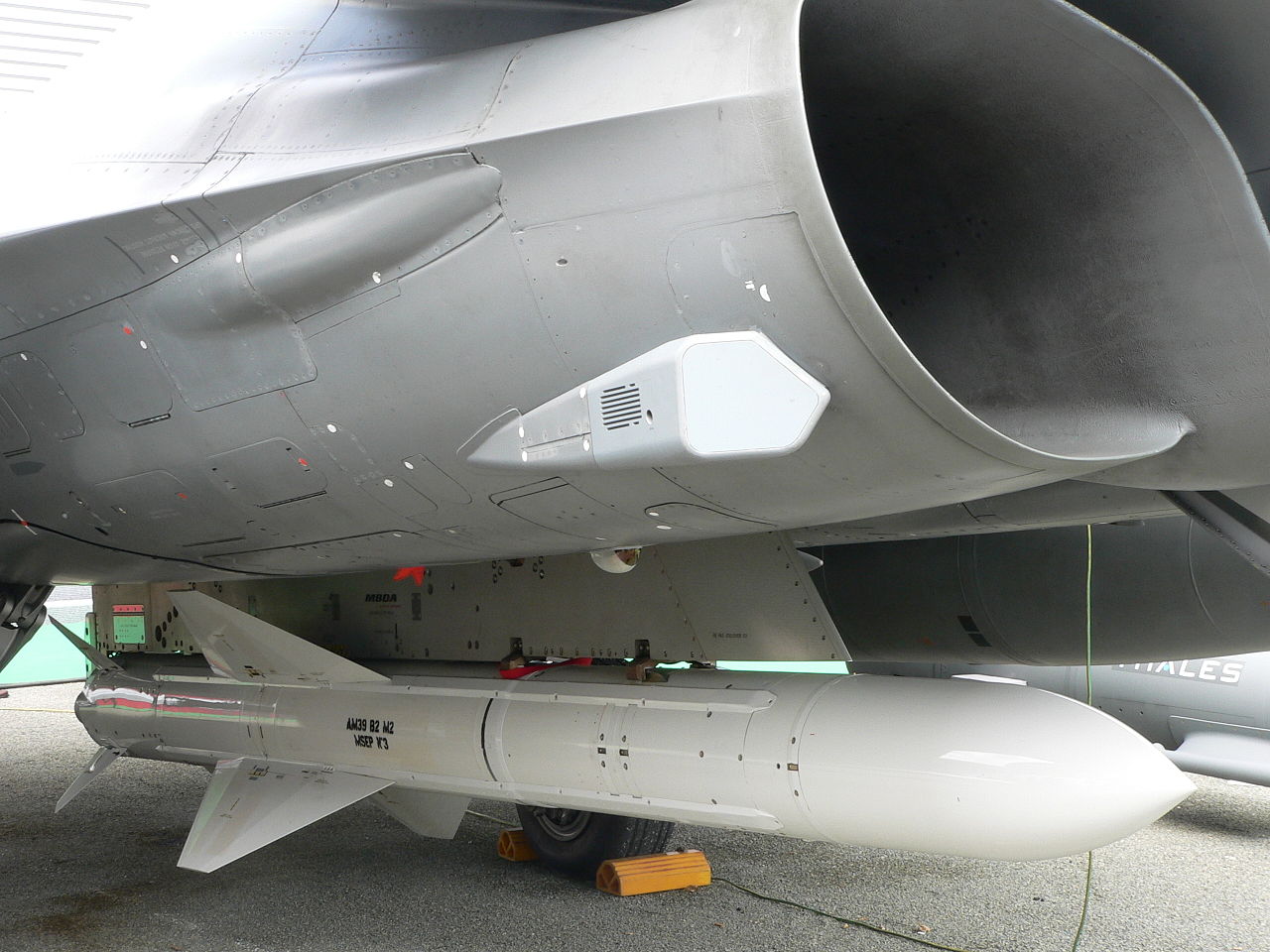
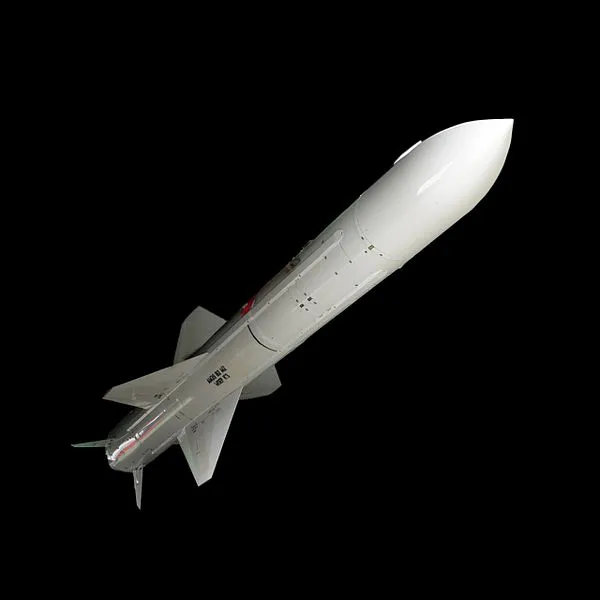
The Exocet, named after the French word for “flying fish,” is a subsonic anti-ship missile that has been a staple in modern naval arsenals since the 1970s. Originally developed by France’s Aérospatiale—now part of MBDA via Airbus Defence and Space—the Exocet has become one of the most widely exported and combat-proven missile systems in the world.
Designed for deployment from ships, aircraft, submarines, and coastal batteries, the Exocet features solid-fuel propulsion and a sea-skimming flight profile that allows it to evade radar detection until the final moments of impact. The missile is guided by an inertial navigation system and an active radar seeker, with modern variants also incorporating GPS guidance for improved accuracy.
Versions and Capabilities
Exocet variants include:
- MM38: Surface-launched; used on warships; range ~42 km. No longer in production.
- MM40: Surface-launched; available in Block 1, Block 2 (72 km range), and Block 3 (200+ km range); deployable from ships and coastal batteries.
- AM39: Air-launched; range between 50–70 km depending on launch altitude and speed.
- SM39: Submarine-launched; encapsulated in a watertight launch canister and fired from torpedo tubes, emerging from the water before igniting its main motor.
The warhead weighs approximately 165 kg and is optimized for high lethality against naval targets. With a top speed of Mach 0.93 (1,148 km/h), the Exocet has proven capable in real-world conflicts.
Combat Proven Across Decades
The Exocet first gained international notoriety during the Falklands War, when Argentine forces used it to sink the British destroyer HMS Sheffield, causing significant casualties and altering naval doctrine. It was also deployed during the Iran-Iraq War, the Gulf War, and various regional conflicts, including engagements involving Israeli and Lebanese forces.
Global Presence
The missile is in active service with more than 30 countries, including France, Turkey, India, Brazil, Egypt, Greece, Germany, the UAE, South Africa, and many others. Its combination of compact design, versatile launch options, and reliable target-tracking has made it a preferred anti-ship solution for navies across five continents.
With over four decades of service and continued upgrades, the Exocet remains a formidable symbol of French missile engineering and a benchmark in modern anti-ship weaponry.
