

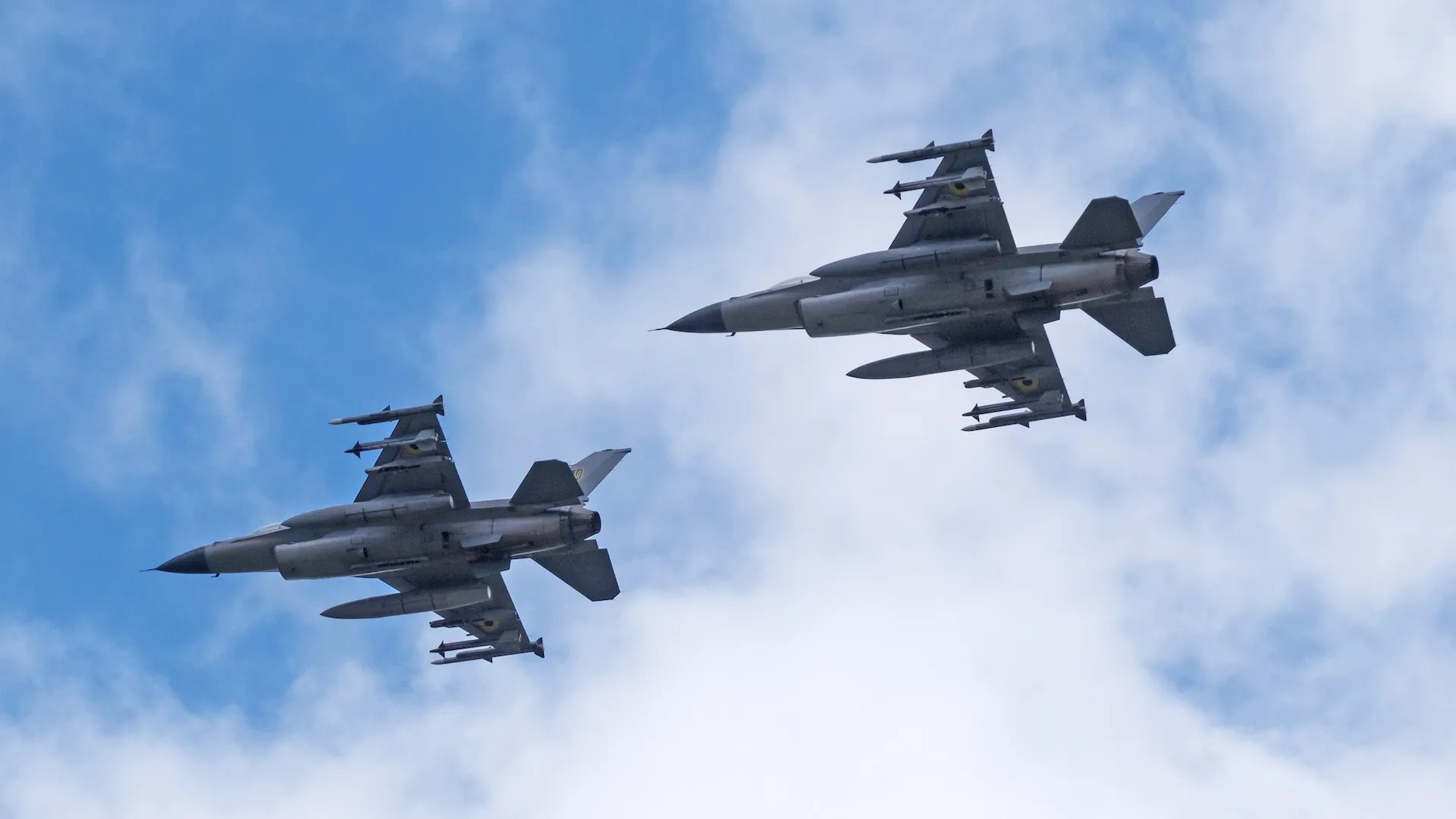
The U.S. Air Force has achieved a milestone in autonomous aviation by pairing an F-16 fighter jet with the AI-controlled XQ-58A Valkyrie drone during a test flight at Eglin Air Force Base, Florida. The classified “Top Gun AI” program marks a decisive step toward integrating autonomous aircraft into future combat formations.
AI-Driven Formation Flight
According to CBS News (October 5, 2025), the test showcased the Valkyrie’s ability to independently track and intercept enemy aircraft, analyze real-time battlespace data, and execute limited dogfight maneuvers. These capabilities demonstrate how the Air Force’s vision of air dominance is evolving—from single-platform superiority to coordinated, manned-unmanned teaming at scale.
Part of the Next-Generation Air Dominance (NGAD) Framework
At the core of this effort is the Collaborative Combat Aircraft (CCA) program, a central pillar of the NGAD initiative. The Air Force aims to field up to 1,000 AI-enabled aircraft by the end of the decade. Each platform, including the Valkyrie, is designed to cost about one-quarter of a manned fighter jet, enabling large-scale, risk-tolerant deployment while reducing operational expenses.
Technical Capabilities of the XQ-58A
Developed by Kratos Defense, the XQ-58A Valkyrie is a jet-powered, runway-independent UAV with a low radar signature, optimized for tactical missions typically reserved for fourth- and fifth-generation fighters. Measuring 30 feet (9.1 m) in length and 27 feet (8.2 m) in wingspan, it can reach 45,000 feet (13,700 m) altitude, cruise at high subsonic speeds, and cover over 2,000 nautical miles (3,700 km). Its internal weapons bay supports both kinetic and electronic warfare payloads.
Strategic Role and Future Impact
The Valkyrie is not a replacement for human pilots but a force multiplier. In potential peer conflicts—such as in the Indo-Pacific—swarms of AI-enabled drones could saturate enemy air defenses, perform decoy operations, or strike key targets without risking pilots’ lives. As General Duke Richardson emphasized:
“The aircraft of the future will fight as a team. Some will have pilots. Some won’t. But all will share the same battle rhythm.”
While challenges remain—such as ensuring reliability in jammed environments and defining ethical frameworks for AI lethality—the successful F-16 and Valkyrie flight offers a glimpse of a future where algorithmic dogfighting becomes a defining feature of air warfare.
