

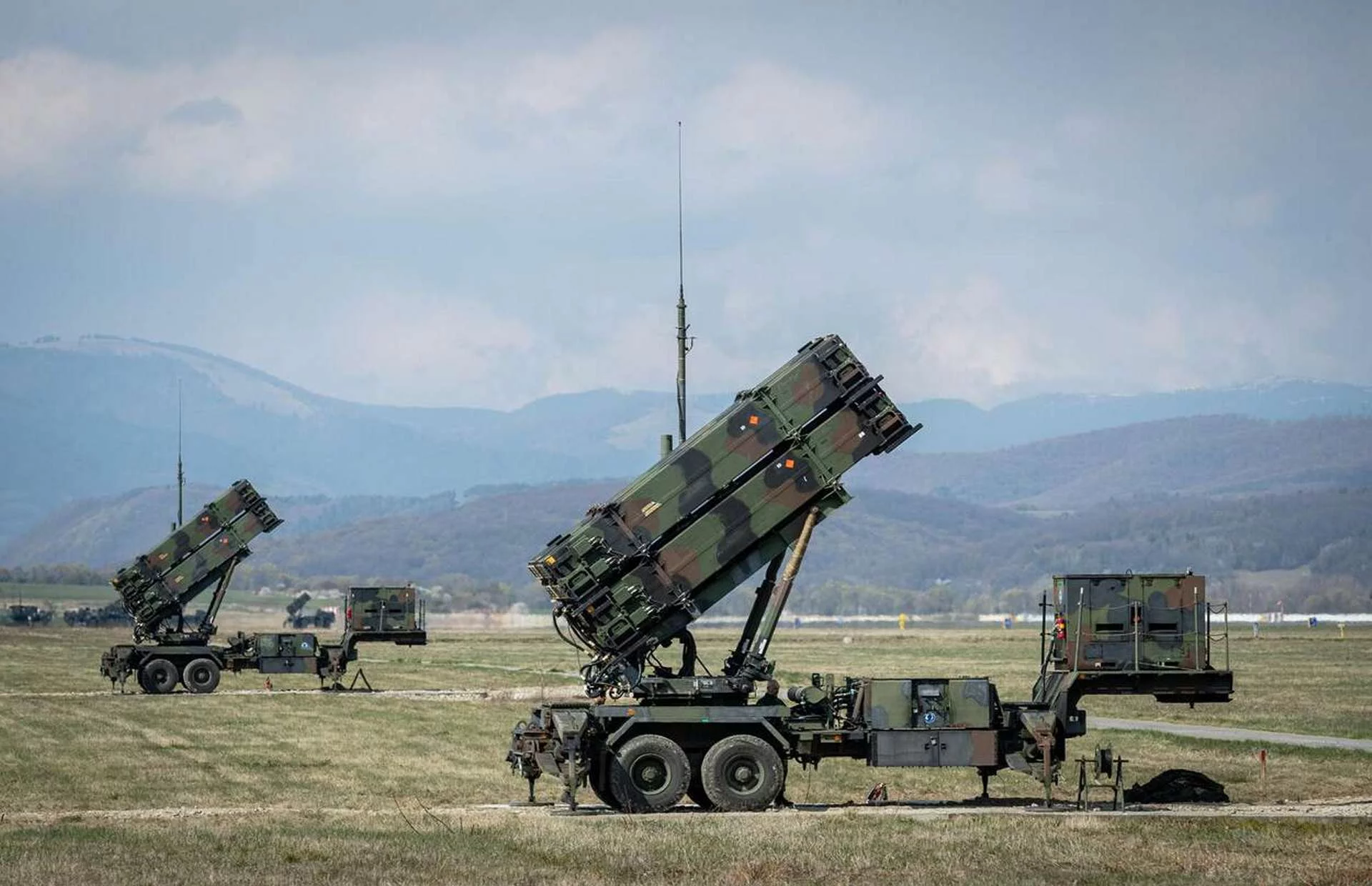
The U.S. State Department has cleared a $105 million Foreign Military Sale to sustain Ukraine’s Patriot air defense systems, reinforcing Kyiv’s high-end missile shield at a time when Russian attacks on cities and energy infrastructure are intensifying.
According to the Defense Security Cooperation Agency (DSCA), the package covers a wide range of support: modernization of legacy M901 launchers to the newer M903 standard, spare parts, prescribed load lists, training, logistics support, and ongoing program management. RTX and Lockheed Martin will serve as prime contractors. The U.S. emphasizes that the sale will not impair American readiness—an important signal to Congress amid concerns over Patriot availability.
Patriot Remains Ukraine’s Only Proven Defense Against Ballistic Missiles
Patriot batteries—built around the AN/MPQ-65 phased-array radar—are the only systems in Ukrainian service capable of reliably defeating Russian ballistic and quasi-ballistic missiles.
- PAC-2 GEM-T intercepts cruise missiles and aircraft at more than 100 km.
- PAC-3 / PAC-3 MSE uses hit-to-kill technology to destroy high-speed ballistic threats.
The upgraded M903 launchers are a key component of the new package. Their modular configuration enables:
- up to 16 PAC-3,
- 12 PAC-3 MSE,
- or mixed PAC-2/PAC-3 loads per launcher.
This significantly increases the number of ready interceptors and allows Ukrainian air defenders to tailor loadouts to incoming Russian strike patterns.
Russian Missile Upgrades Reduce Ukrainian Interception Rates
Ukraine’s successful interception of the Kh-47M2 Kinzhal in May 2023 once highlighted Patriot’s potential. But U.S. and Ukrainian officials report that Russia has since upgraded Iskander-M and Kinzhal missiles with software-driven terminal maneuvers. As a result, Ukraine’s ballistic interception rate plunged from around 37% in August to roughly 6% in September 2025, enabling more strikes on key infrastructure.
Maintaining Patriot’s effectiveness now requires constant software updates, launcher upgrades, and a dependable supply chain for radars, electronics and spare parts.
Shift From Emergency Aid to Long-Term Sustainment
The new $105 million approval follows a $179.1 million Patriot sustainment case announced in August 2025, indicating that Washington is moving toward a multi-year sustainment strategy for Ukraine’s upper-tier air defenses. European allies are increasingly purchasing Patriot components for Ukraine via NATO funding, while the U.S. quietly replenishes German stocks to enable further transfers.
For Ukraine, sustainment equals survivability. Every Patriot battery kept operational protects critical infrastructure, command centers and ammunition depots from Russia’s most advanced missiles. While this package alone will not close Ukraine’s air-defense gap, it ensures the Patriot system remains viable and adaptable in an increasingly contested battlespace.
