

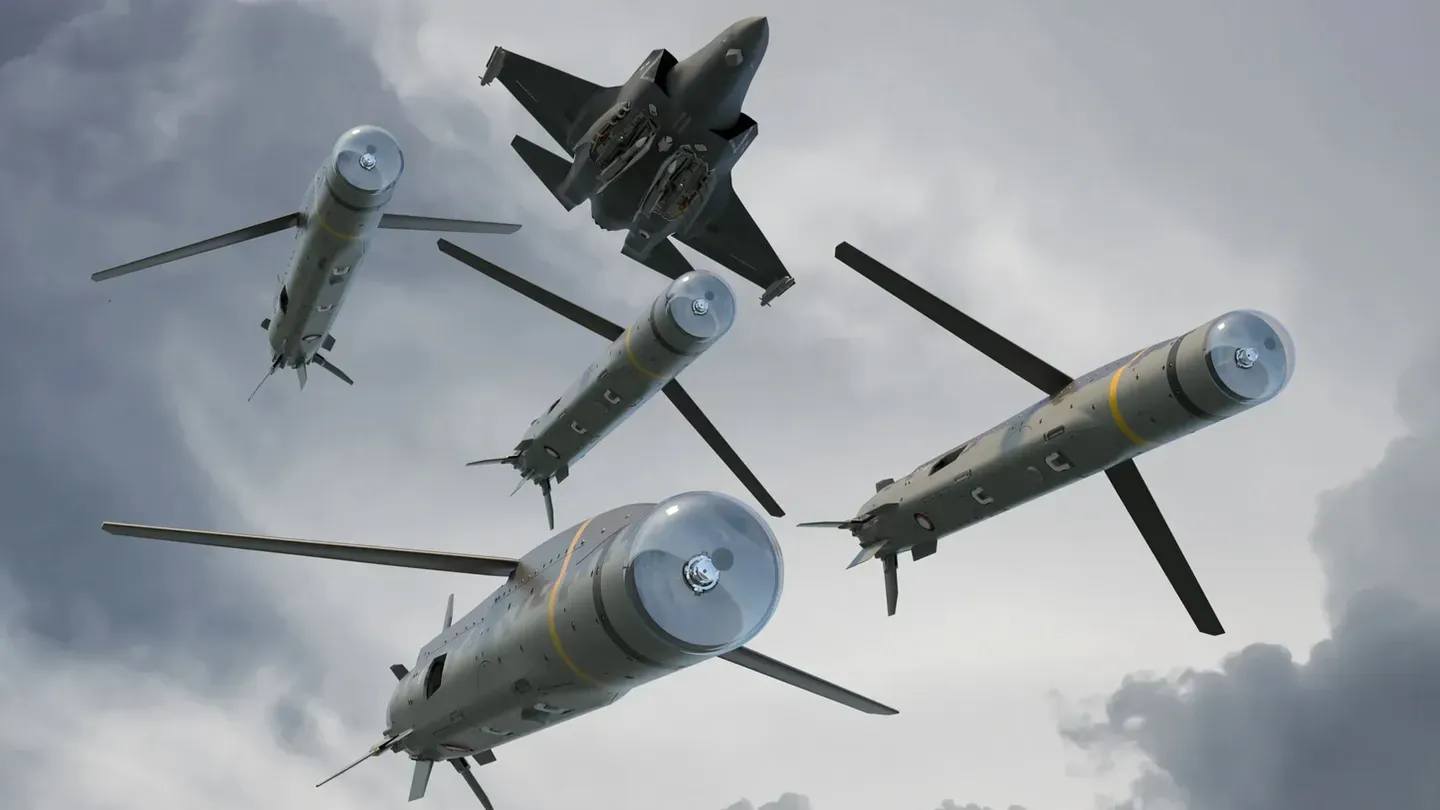
According to The Wall Street Journal on August 23, 2025, the United States has authorized the transfer of 3,350 Extended Range Attack Munition (ERAM) air-launched guided missiles to Ukraine. The package, worth about $850 million (€780 million) and largely financed by European nations, is expected to see its first deliveries within six weeks. The decision came after U.S. President Donald Trump held high-level talks with Russian President Vladimir Putin and Ukrainian President Volodymyr Zelensky, underscoring the political sensitivity of the deal.
The ERAM is a next-generation standoff weapon designed to expand the strike capabilities of Western fighter aircraft. With a range of 240 to 450 km depending on launch profile, it can destroy both stationary and mobile targets under heavy electronic warfare conditions. Guided by GPS and inertial navigation, and equipped with a terminal seeker for final-phase accuracy, the missile carries a high-explosive warhead effective against hardened sites such as ammunition depots, radar installations, and command centers. Its modular design allows for different warhead options, while its compact size enables integration on multiple aircraft types, including the F-16s now being delivered to Ukraine.
However, Washington has made it clear that Kyiv will not have unrestricted authority over the weapon’s use. Each strike will require case-by-case approval from the Pentagon, a safeguard aimed at preventing attacks on Russian sovereign territory. This mirrors previous restrictions imposed on deliveries of Storm Shadow, SCALP-EG, and ATACMS missiles, reflecting the U.S. strategy of supporting Ukraine while managing escalation risks.
The heavy financial contribution from European allies highlights a shift in burden-sharing within NATO. By covering most of the $850 million cost, European nations are signaling a long-term commitment to Ukraine’s defense while jointly assuming the political risks of deploying advanced strike systems.
For Ukraine, the ERAM’s arrival coincides with the integration of Western-supplied F-16 fighters. With its 400+ km range, the missile will allow Ukrainian pilots to hit key Russian assets—such as logistics hubs, airbases, and command posts—without entering the densest layers of Russian air defenses like the S-400. This could force Moscow to relocate infrastructure further from the front, stretching supply lines and complicating its operational tempo.
Strategically, the ERAM transfer represents more than just another arms delivery. It signals Ukraine’s transition from a primarily defensive posture to one with significant long-range strike capabilities, reshaping the battlefield dynamic. For Kyiv, success will depend not only on the missile itself but also on integrating it effectively and using it responsibly—demonstrating to allies that it can leverage this advanced capability while maintaining Western confidence.
