

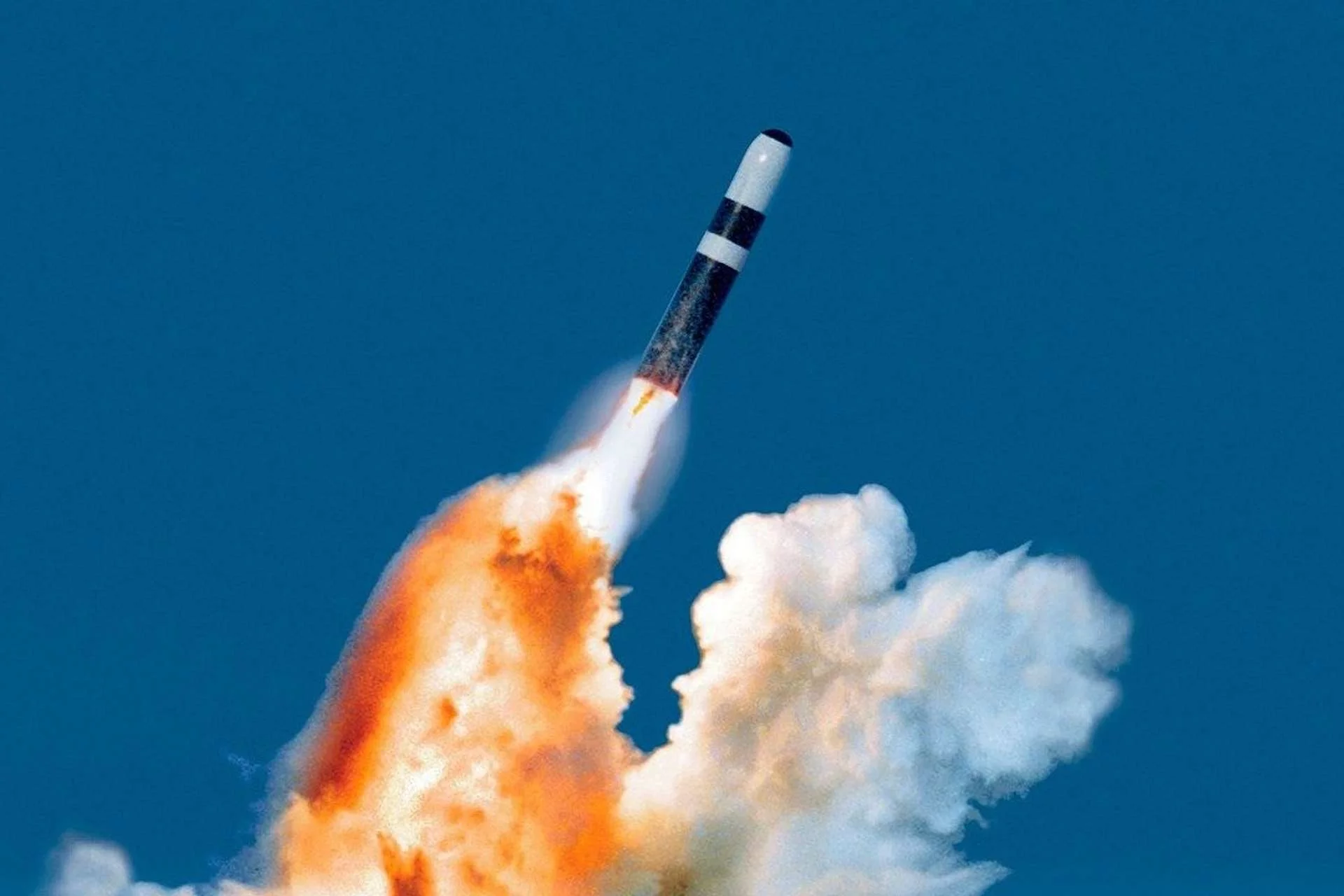
The U.S. Department of War has awarded Lockheed Martin a $647 million contract to continue building the Trident II D5 submarine-launched ballistic missile. If all contract options are exercised, the deal could reach nearly $746 million. The move reinforces nuclear deterrence for both the United States and the United Kingdom at a time of heightened global tensions.
First fielded in 1990, the Trident II D5 remains the cornerstone of U.S. and U.K. sea-based nuclear forces, deployed aboard Ohio-class and Vanguard-class submarines. With a range exceeding 7,000 kilometers and the ability to deliver multiple warheads against different targets, the system forms the backbone of the survivable second-strike capability. Recent upgrades under the Life Extension Program have modernized its guidance, electronics, and reentry systems, extending its service life into the 2040s.
Over more than three decades of testing, the Trident has built a reputation for accuracy and reliability, making it one of the most trusted weapons in America’s nuclear arsenal. Lockheed Martin has remained the prime contractor throughout the program, ensuring continuity in production and sustainment.
This latest contract is about more than hardware. As Russia and China advance their own nuclear modernization, Washington’s decision to maintain and expand Trident production signals determination to uphold credibility within the nuclear triad. For NATO allies, it is reassurance of long-term commitment; for rivals, it serves as a reminder of the risks of escalation.
The Trident II D5 program is thus both a technological and political statement—ensuring that U.S. and U.K. nuclear forces remain reliable and survivable well into the future.
