

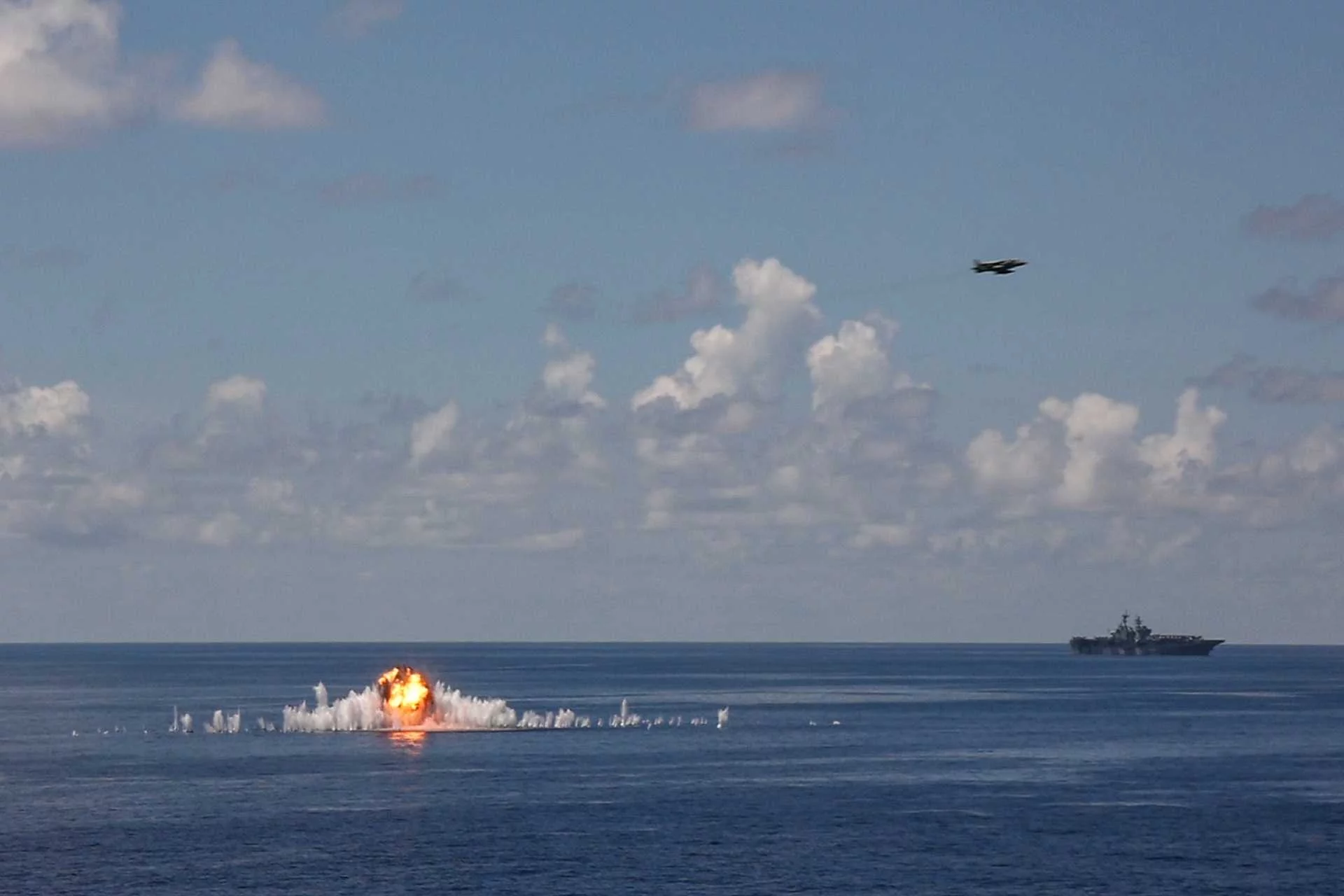
In a clear display of force aimed at Venezuela, the U.S. Marine Corps conducted a live-fire precision strike in the Caribbean Sea using an AV-8B Harrier II jet launched from the USS Iwo Jima on October 2. While officially labeled a training mission by the Pentagon, defense insiders acknowledge the exercise was executed under “operational conditions” and served as a potent strategic signal following a fatal maritime incident that has inflamed tensions between the two nations.
The crisis escalated sharply on September 13, when a U.S. Navy operation resulted in the sinking of a Venezuelan-flagged boat and the death of 11 individuals. The U.S. justified the action as a counter-narcotics effort, but Venezuela condemned it as an act of aggression, subsequently deploying F-16 fighters and activating coastal radar systems to track U.S. naval assets.
Against this backdrop, the deployment of the Harrier—a V/STOL aircraft capable of operating from ships without needing a conventional runway—highlights America’s flexible and rapid-response capabilities. Despite being near the end of its service life, the Harrier remains a formidable platform, armed with precision munitions capable of targeting cartel infrastructure, such as hidden airstrips and drug labs, or interdicting smuggling vessels at sea.
This maneuver signals a more assertive U.S. posture in the Caribbean, aimed at deterring both transnational criminal organizations and their state sponsors. The ability to launch unilateral strikes from international waters provides Washington with a powerful tool to apply pressure while managing the risk of escalation. Ultimately, this show of force demonstrates that the U.S. military is not merely conducting drills but is postured and prepared for immediate action in the region.
