

The US Department of Defense confirmed on August 15 that air and naval assets have been deployed to the southern Caribbean in an effort to intensify operations against Latin American drug cartels, Reuters reported. Ordered under the direction of Secretary of State Marco Rubio, the move is framed not only as a counter-narcotics mission but also as a broader national security strategy aimed at safeguarding regional stability.
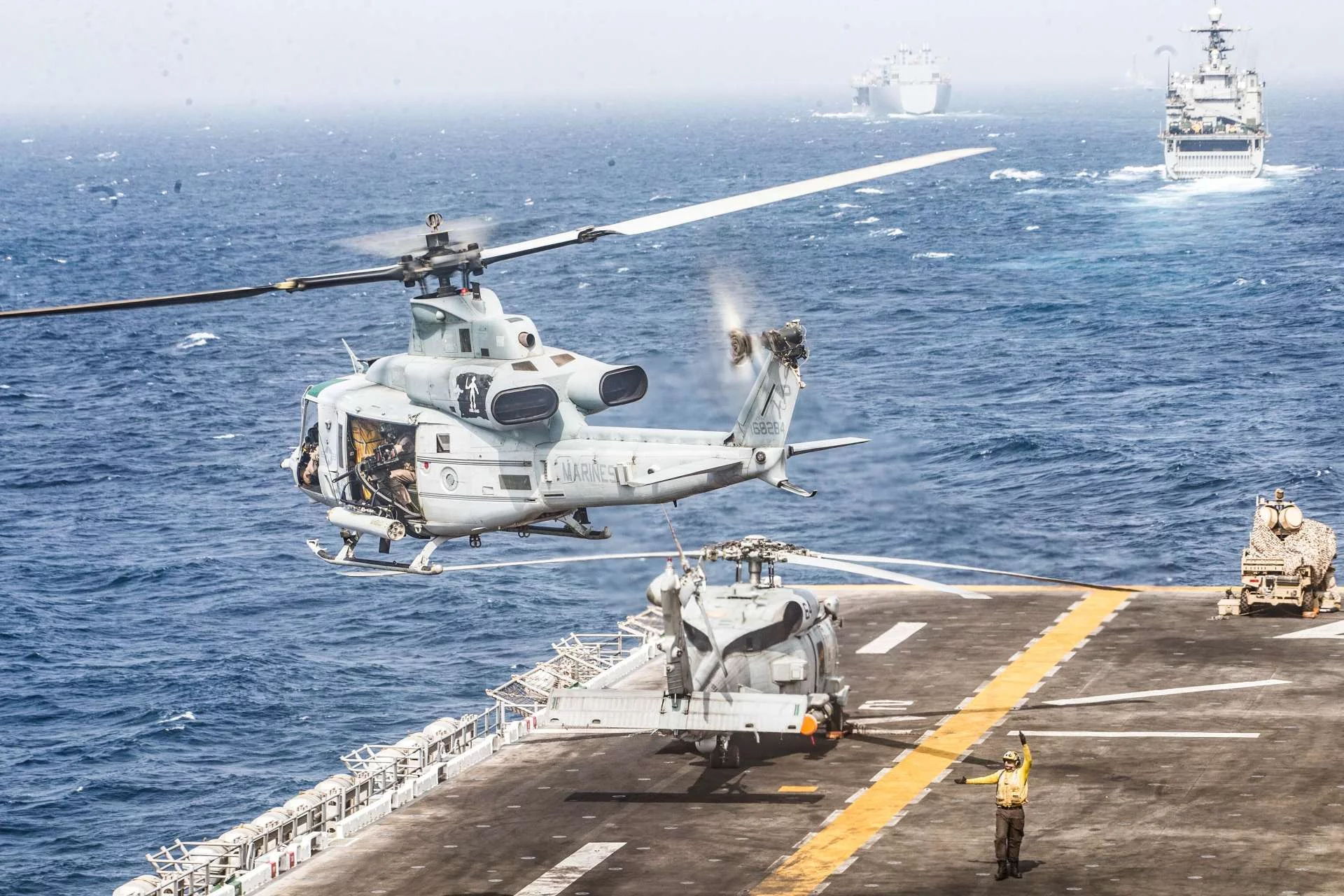
The operation, coordinated by US Southern Command, will include the Iwo Jima Amphibious Ready Group, the 22nd Marine Expeditionary Unit, a nuclear-powered attack submarine, a guided missile cruiser, Arleigh Burke-class destroyers, and Boeing P-8A Poseidon maritime patrol aircraft. Additionally, UH-1Y Venom helicopters will provide close air support and mobility from amphibious platforms. These helicopters, capable of carrying up to eight fully equipped Marines, are armed with 70 mm Hydra rockets and GAU-17/A machine guns, while the P-8A Poseidon enables persistent surveillance and anti-submarine missions across smuggling routes.
Washington has a long history of anti-narcotics missions in the Caribbean, dating back to the 1980s with Operation Blast Furnace in Bolivia and Operation Just Cause in Panama, alongside ongoing maritime patrols under Joint Interagency Task Force South. Today, the US 4th Fleet continues to support anti-smuggling operations, applying lessons learned from past missions to extend surveillance and interdiction across broader maritime corridors.
By integrating amphibious groups, naval forces, and advanced patrol aircraft, the US aims to counter cartels’ increasingly sophisticated logistics and fast smuggling vessels. The presence of a nuclear-powered submarine and guided missile cruiser also signals deterrence against both criminal networks and hostile states accused of enabling trafficking.
Strategically, the deployment underscores Washington’s growing concerns about links between organized crime and state actors in Latin America. Secretary Rubio directly accused the Maduro regime in Venezuela of turning the state into a “criminal enterprise,” facilitating trafficking, and threatening US companies operating in Guyana. At the same time, Guyana’s Vice President Bharrat Jagdeo welcomed the US presence as complementary to his country’s counter-narcotics efforts.
Ultimately, this move represents more than a tactical strike against drug traffickers. It signals a broader US commitment to maritime security, protection of economic interests, and deterrence against adversarial regimes seen as destabilizing the region.
