

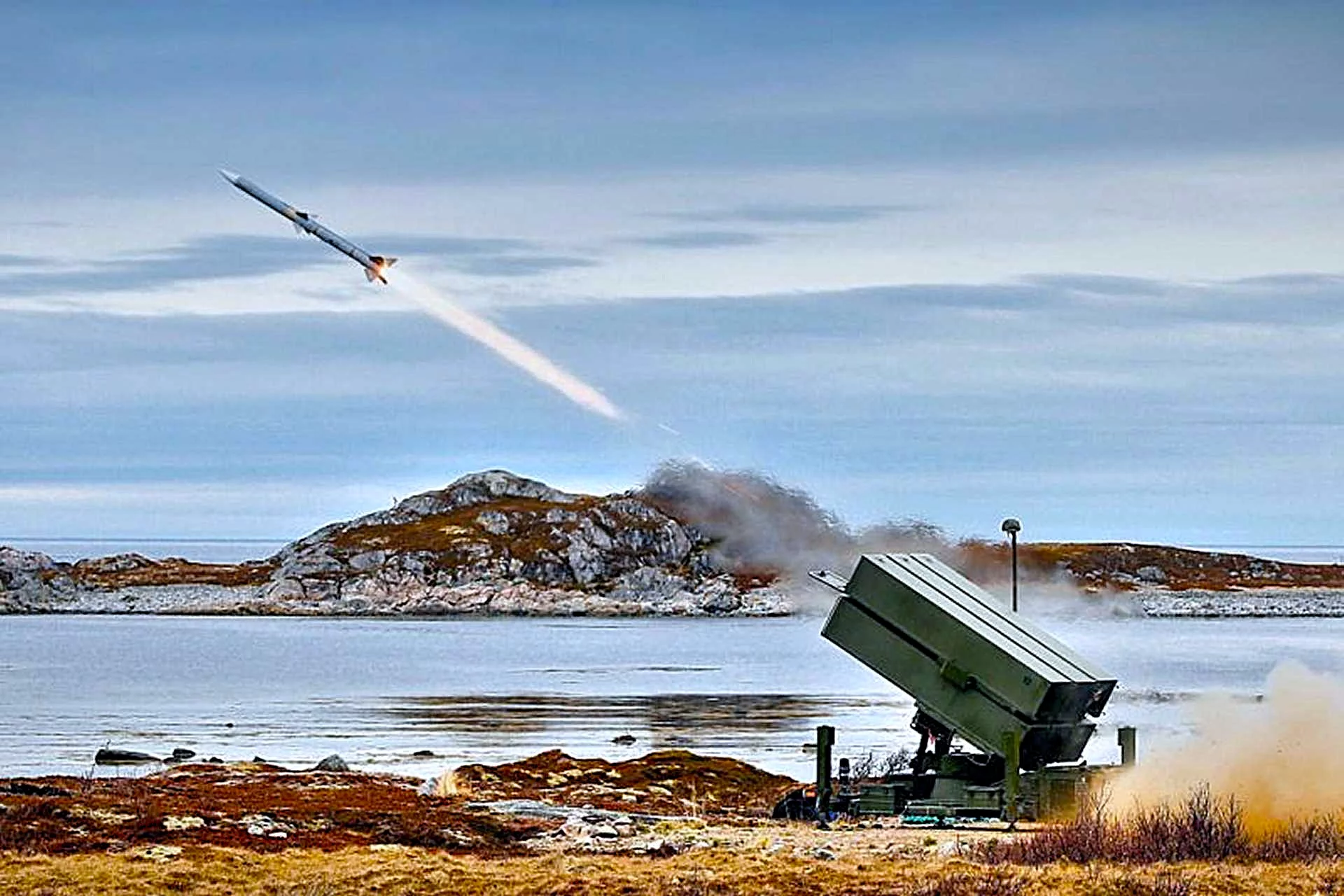
Norway has committed approximately NOK 1 billion to a deal with Kongsberg Defence & Aerospace for new NASAMS components, aimed at substantially reinforcing its national air defense capabilities. This procurement highlights the immediate regional need to address evolving drone and missile threats, which are fundamentally altering NATO’s security landscape in Northern Europe.
On October 31, 2025, Norway moved to augment its ground-based air defenses with this fresh NASAMS order from the domestic contractor, valued at roughly NOK 1 billion. As confirmed by KONGSBERG, this action directly counters the persistent drone and missile pressures observed across the High North and the European continent. The decision reflects a broader trend among Scandinavian nations to fortify infrastructure and military assets against the standoff attacks and saturation raids that have reshaped defense planning since 2022.
The purchase prioritizes faster decision-making and enhanced survivability at the battery level, signifying a key doctrinal shift toward highly mobile, dispersed, and network-centric operations. This announcement is significant for NATO’s posture along the North Atlantic and Arctic access routes, where robust sensor and effector platforms are vital for credible deterrence.
NASAMS is a modular, medium-range, network-enabled air defense system co-developed by KONGSBERG and Raytheon. It integrates multiple sensors with distributed launchers that fire AMRAAM-family interceptors. Its flexible architecture allows the system to integrate various missiles, radars, and electro-optical sensors under a common fire distribution logic, making it adaptable to different threats and terrains. Currently operated by thirteen countries, the system is known for its open interfaces, reliable supply chains, and incremental upgrades designed to keep pace with threats like low-flying cruise missiles, one-way-attack UAVs, and standoff munitions.
Initially designed in the 1990s for the Norwegian Armed Forces, NASAMS has seen continuous upgrades driven by user feedback and new component development. The most recent Norwegian package equips batteries with up-to-date command posts, wheeled communications hubs, and replaces legacy MRR radios with KONGSBERG’s THOR Combat Net Radio. This modernization boosts bandwidth, resilience, and mobility, favoring rapid displacement, wider dispersal, and quicker engagement cycles necessary to survive electronic warfare and counter-battery fire.
Operational usage in Ukraine has underscored NASAMS’s primary strengths: sensor fusion, flexible topology, and high efficacy against low-altitude cruise missiles and UAVs when sufficient interceptors are available. Norwegian and Ukrainian reports attribute roughly 900 successful interceptions and an estimated 94% effectiveness rate to NASAMS by early 2025, particularly against Kh-101/Kh-555 cruise missiles and Shahed-type UAVs. These real-world results reinforce the European focus on investing in dispersed Command-and-Control (C2) systems, protected communications, and adequate missile stockpiles, moving away from static, point-defense positions.
Strategically, this Norwegian acquisition carries considerable geopolitical, geostrategic, and military weight against Russian threats. Geopolitically, it signals sustained NATO-Nordic rearmament and industrial alignment, leveraging a domestic prime contractor to ensure sovereign upgrade pathways. Geostrategically, strengthening layered air defense along the Norwegian Sea and Arctic corridors complicates Russian plans for coercive strikes on energy infrastructure, air bases, and maritime traffic. Militarily, the refreshed NASAMS nodes—featuring hardened radios and mobile C2—expand coverage and increase the cost of saturation attacks, while enhancing interoperability with allied systems rotating through Norway during exercises.
Valued at approximately NOK 1 billion (about USD 95–100 million), the contract focuses on communications nodes, command posts, and THOR radios. It also includes orders for long-lead components to accelerate any subsequent deployments in line with Norway’s Long-Term Plan for the Defence Sector.
Norway’s decision is more than a mere hardware refresh; it formalizes a doctrine of agile, networked air defense tailored for the current missile and drone environment and designed to be interoperable for future coalition operations. By investing in survivable C2 and resilient communications alongside its launchers, Oslo not only strengthens its national protection of forces and infrastructure but also bolsters NATO’s northern shield.
