

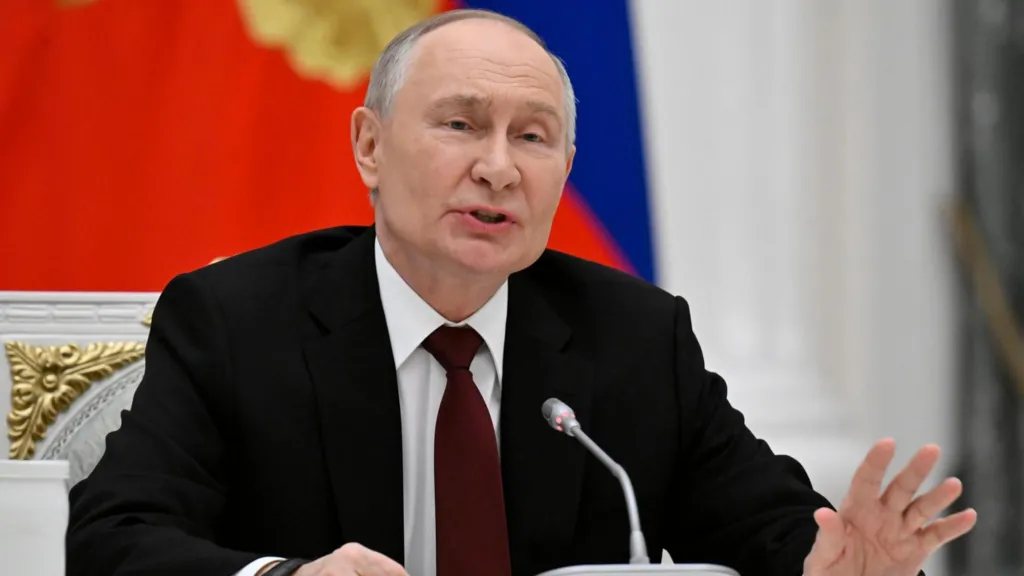
Russian President Vladimir Putin will meet U.S. special envoy Steve Witkoff in Moscow on Tuesday, in what could become a pivotal moment in efforts to end the war in Ukraine. The meeting follows White House statements expressing “strong optimism” about progress toward a peace deal.
Jared Kushner—former President Donald Trump’s son-in-law and an informal adviser in diplomatic efforts—is also expected to join the talks.
The Moscow meeting comes directly after two days of negotiations in Florida involving Ukrainian and U.S. officials, including Witkoff and Kushner, aimed at revising a U.S.-drafted peace proposal that Ukraine had initially viewed as overly accommodating to Moscow.
Ukrainian President Volodymyr Zelensky called the discussions “constructive,” but warned that “tough issues remain.” Kremlin spokesman Dmitry Peskov confirmed that Putin would meet Witkoff on Tuesday afternoon.
Speaking alongside French President Emmanuel Macron in Paris on Monday, Zelensky said Ukraine’s top priorities in any peace deal were to safeguard sovereignty and secure meaningful security guarantees. He noted that territorial questions remain “the most difficult” aspect of the negotiations, as Russia continues to demand that Kyiv surrender eastern territories it still controls—something Ukraine has repeatedly insisted it will never accept.
Witkoff has also held talks with UK Prime Minister Sir Keir Starmer, Zelensky, and Ukraine’s new chief negotiator Rustem Umerov, with several European leaders joining the Macron–Zelensky meeting virtually.
White House Press Secretary Karoline Leavitt said the peace plan draft had been “significantly refined,” adding that the administration felt “very optimistic,” though she declined to share details while negotiations are ongoing.
Putin said last week he had reviewed the U.S. plan and believed it could serve as a “basis” for a future agreement, though Kremlin officials later expressed skepticism after Kyiv and European partners pushed through amendments.
The initial U.S.–Russia draft circulated in November caused alarm in Kyiv and across Europe. Critics said it tilted heavily toward Kremlin demands, dictated how frozen Russian assets in Europe should be managed, and imposed conditions on Ukraine’s access to European markets.
Macron stressed on Monday that “no finalized peace plan exists yet” and insisted that Ukraine and Europe must shape any final proposal. He said territorial issues “can only be decided by President Zelensky,” and warned that aspects involving Russian assets, European security guarantees, and Ukraine’s EU candidacy required broad European involvement.
EU foreign policy chief Kaja Kallas said the coming days could prove “pivotal,” but warned that Russia is keen to negotiate “only with those who offer them something beyond what they already hold.” She cautioned that pressure might be placed on “the weaker side” simply to force an end to the war—an outcome she said is “in no one’s interest.”
Meanwhile, Russian officials claimed to have captured the strategic towns of Pokrovsk and Vovshansk in eastern Ukraine. Ukrainian officials have made no such confirmation, and open-source monitoring groups report that neither settlement is fully under Russian control.
