

French warplane manufacturer Dassault Aviation’s attempt to boost its influence in the Future Combat Air System (FCAS) — Europe’s next-generation fighter jet program — is once again shaking the fragile balance between France, Germany, and Spain. According to recent reports, Dassault may receive up to 80% of the workshare in some key components of the project, a possibility that has raised concerns among Germany and Spain, represented by Airbus Defence and Space.
German defense publication Hartpunkt, followed by Reuters, reported that a formal redistribution of roles in the development of the core fighter aircraft may be on the horizon. Such a move could reignite friction within a program largely kept afloat by the political commitment of French Defense Minister Sébastien Lecornu and his German counterpart Boris Pistorius.
The Long Road to a Sixth-Generation Fighter
The FCAS project aims to develop a sixth-generation combat aircraft to replace France’s Rafale and Germany’s Eurofighter fleets by the 2040s, with a mid-decade launch appearing most likely.
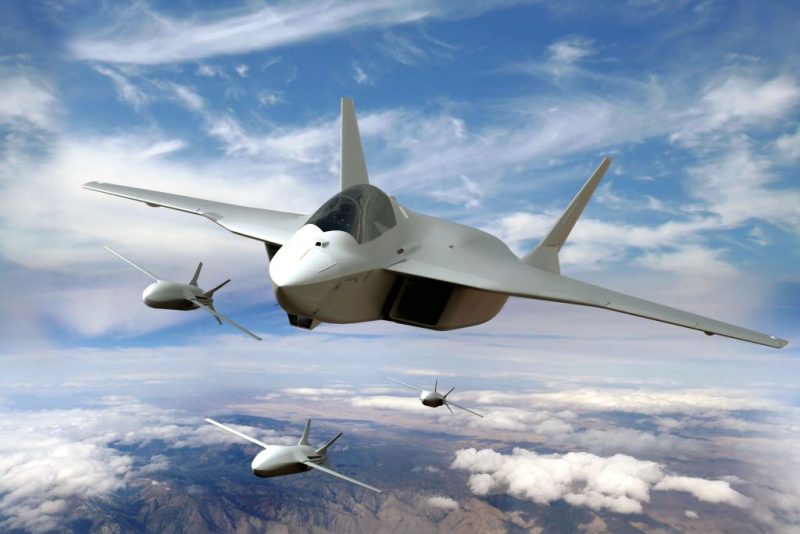
At its core, the system will feature a new-generation fighter jet supported by autonomous drones capable of performing strike, surveillance, and electronic warfare missions — all dynamically controlled mid-flight. An AI-powered “combat cloud” will serve as the command and control hub, fusing sensor data and coordinating operations in real time.
Led by France, the three partner nations have cooperated for years on various subprojects. While the overall responsibility is reportedly split roughly 50-50, the main source of friction has consistently been the design and leadership of the core fighter aircraft, particularly between Dassault and Airbus.
Dassault: “Building the Aircraft Requires a Single Leader”
Dassault CEO Éric Trappier has openly opposed giving Airbus any significant authority in the design process. According to Trappier, France’s sovereign control over its defense exports — which has long supported Dassault’s aircraft development — must remain unquestioned for reasons of national security. He argues that a single leader with full decision-making power over subcontractors is essential to effectively manufacture the aircraft.
“I’m not saying everything has to be done in France, but we must be able to select the best in order to build the best aircraft,” Trappier said in a June address to the French parliament. He emphasized that the upcoming Phase 2 of the project — the demonstrator aircraft phase — requires a reassessment of roles set during the earlier design-focused phase.
Airbus and Germany: “Balance Has Already Been Achieved”
Airbus, with its multinational structure and extensive European industrial base, seeks to protect its role within FCAS. The company stresses that its expertise and workforce — spread across Europe through programs like the Eurofighter — are essential to the program’s long-term success, and that such a multinational endeavor cannot be effectively led by a single nation.
A spokesperson for the German Ministry of Defense affirmed that a balanced workshare agreement had already been reached at the government level, and there had been no official move from Paris to disrupt that understanding.
A Partnership Under Pressure
FCAS is seen as a strategic test of Europe’s collective vision for defense innovation. However, Dassault’s increasing demands and the power struggle with Airbus risk derailing the effort. If the involved parties fail to clarify their roles and responsibilities soon, this flagship program may face more political gridlock than technical setbacks — hitting a wall of diplomacy before it ever reaches the runway.
